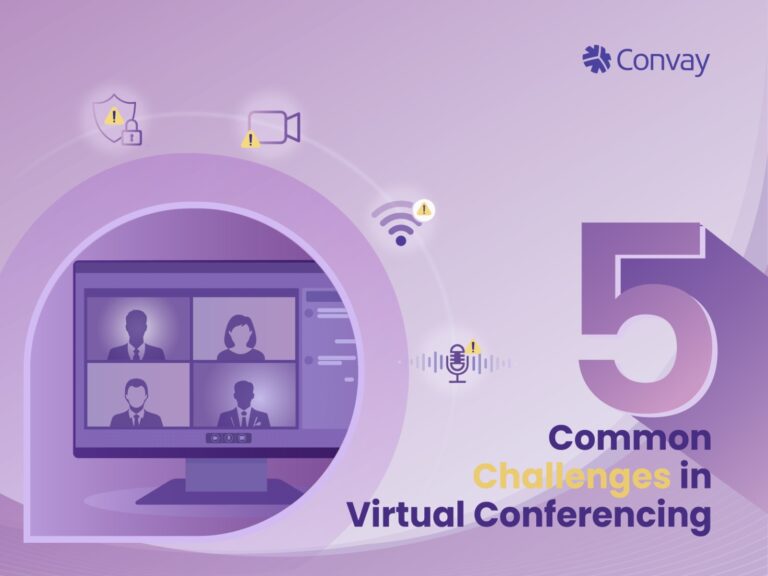
5 Common Challenges in Virtual Conferencing
5 Common Challenges in Virtual Conferencing As the world increasingly embraces virtual communication, the convenience of connecting with anyone, anywhere is unparalleled. However, the
Read postConvay protects your meetings, messages, and files with End-to-End Encryption (E2EE) and AES-256, the same encryption standard used by defense and banking systems. Only you and your participants can access your data.
From voice to video to shared files, everything using multiple defense layers.
AES-256 encryption is mathematically secure, meaning even supercomputers can’t break it.
Your messages and meetings stay completely private — not even Convay’s servers can access them.
Continue your collaboration after the meeting with recordings, transcriptions, and AI minutes.
Ensure only intended participants can access content.
Use the industry’s strongest symmetric encryption.
Encrypt at rest, in transit, and during sessions.
Keep data unreadable even to Convay.
Refresh keys automatically to limit exposure.
Secure signaling, media, and data channels.
Verify every login, device, and action before access.
Map controls to FedRAMP, ISO 27001, SOC 2.
Detect and block intrusions in real time.
Keep backup data protected end-to-end.
Maintain encryption and RBAC across integrations.
Provide evidence of ongoing security posture.
From cabinet meetings to confidential files, Convay’s encryption ensures national data stays secure. Convay's E2EE locks down sensitive briefings and crutial discussions, using AES-256 to prevent unauthorized access.
Ensure lectures, research, and file exchanges stay confidential. Convay ensures zero risk of unauthorized access or leaks.
Secure confidential reports and data with advanced encryption protocols. Convay's AES-256 protects everything to prevent breaches and keeps every action audit-ready.
Even when your teams work across continents, your data never leaves its encrypted digital workplace. Enable global collaboration with peace of mind.
Protect every call, chat, and file with End-to-End Encryption (E2EE) and AES-256.
Keep your data to yourself only.
5 Common Challenges in Virtual Conferencing As the world increasingly embraces virtual communication, the convenience of connecting with anyone, anywhere is unparalleled. However, the
Read post
Introduction The shift to remote and hybrid work has created a boom in video conferencing and online meeting platforms. They are central to how governments
Read post
The shift to digital collaboration has transformed how governments, enterprises, and educational institutions connect and operate. With teams distributed across locations and sensitive data being
Read post
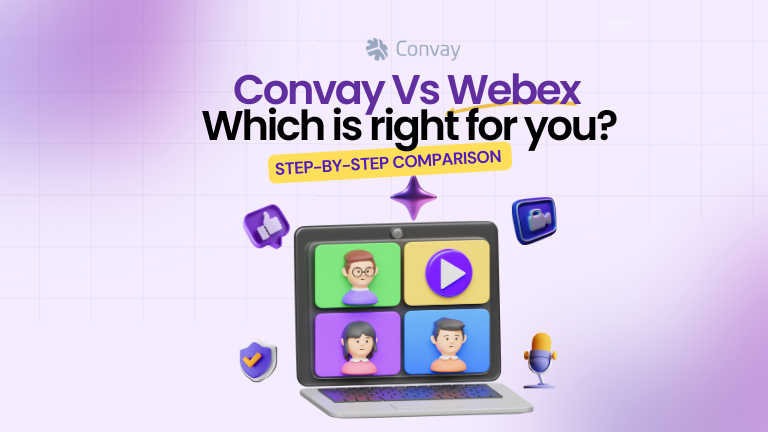
Convay vs Microsoft Teams: Which Collaboration Platform Wins in 2025? Meta Description This article delivers a comprehensive Convay vs Microsoft Teams comparison for 2025. We
Read postE2EE stands for End-to-End Encryption. It means your data is encrypted from the moment you send it until it reaches the intended recipient — no one in between (not even Convay) can read or access it.
AES-256 is an advanced encryption standard used by defense and banking sectors worldwide. It locks your data with a 256-bit key — making it mathematically unbreakable by current technology.
All your audio, video, and messages are encrypted with E2EE + AES-256. Even Convay’s servers only handle encrypted data — they never see or store your content in readable form.
Yes. Whether it’s one-to-one calls, large conferences, or webinars — Convay applies end-to-end encryption automatically, keeping every session secure.
Convay is a secure, sovereign video collaboration platform built for governments, enterprises, and institutions. Stay connected with full control over your data—no compromises.
Convay © 2026 All rights reserved.